Written by Fadhil, LangkawiGo.
Kilim eagle feeding is the stop most guests remember from a Langkawi mangrove tour. The boat slows down in the wide river, someone points at the sky, and within seconds dozens of eagles start to circle above you. This guide explains what you actually see, why it happens, and how to get the best view and the best photos.
On this page
What is Kilim eagle feeding?
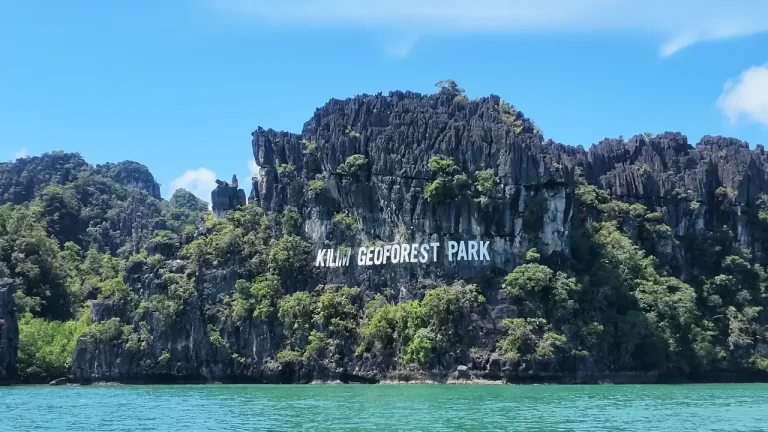
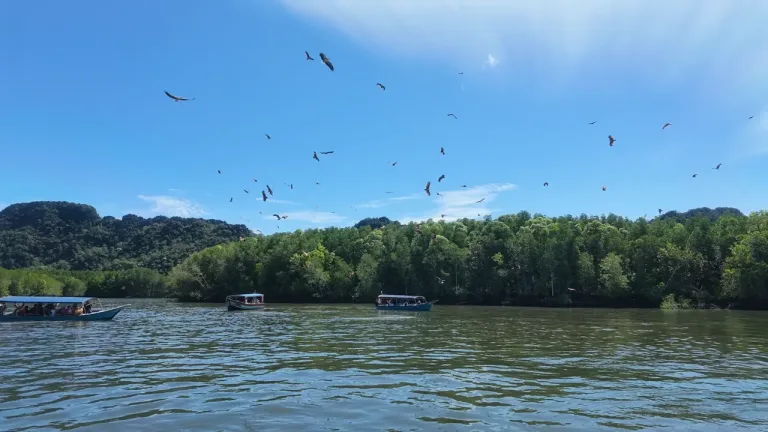
Kilim eagle feeding happens on the main river inside Kilim Karst Geoforest Park, on Langkawi’s north-east coast. Wild eagles live along the mangroves and limestone cliffs here all year. At one stretch of the river, a boat throws a little food onto the water. The eagles dive down to grab it, and the boats nearby stop to watch.
Every one of our mangrove boat packages stops here, from the 2-hour sharing boat to the 4-hour private boat. You do not need to book anything extra.
Which eagles will you see?
Two kinds of eagle come to this part of Kilim:
- Brahminy kite (helang merah). Reddish-brown body with a white head and chest. This is the eagle on Langkawi’s famous statue at Dataran Lang, and it is the one you will see most.
- White-bellied sea eagle. Bigger, with a grey back, a white belly and a short, wedge-shaped tail. It often flies higher and dives harder.
How many? It changes every day. On a quiet day you might count around 10. On a busy day there can be hundreds in the air at once. The eagles are always in the area. When they have already eaten, fewer of them come down, so the number you see depends more on the birds than on the time.

The moment everyone waits for
Ask our guests what they liked most and the answer is nearly always the same: the dive. An eagle drops from high in the sky with its wings folded in. It keeps falling until it is just above the water, then opens its wings at the last second and snatches the food floating on the surface. Then it climbs back up with the food in its claws. It happens fast, and it happens again and again while the boat waits.
“Watching the eagle come straight down, then open its wings right at the water and take the food, never gets old. Guests always go quiet for a second, then everyone starts talking at once.” – Fadhil
Why only a few boats feed the eagles
People are often surprised to learn that most boats do not feed the eagles at all. Out of about 10 boats on the river, usually only one throws food. There are two reasons for this.
- The eagles keep hunting. A small amount of food keeps the birds interested without filling them up. They still hunt for fish on their own, which keeps them wild and healthy.
- Flight safety. Langkawi International Airport is not far away. Keeping the eagles in the Kilim area, away from the airport, helps stop them from flying into the path of planes.
So the term “eagle feeding” is a little misleading. For most guests it is really eagle watching: you sit back in the boat and watch wild birds hunt.
Can you feed the eagles yourself?
No. Guests are not allowed to feed the eagles. Please do not throw bread, snacks or any food from the boat. Human food is bad for the birds, and it also brings rubbish into the river. Let the boat crew handle it and keep your hands free for your camera.

How long does the boat stop?
The usual stop is around 5 minutes. It is flexible. If the eagles are active and everyone is enjoying it, the boatman can stay a little longer. On a private boat you have even more say in how long you stay.
What if the eagles do not show up? It is rare. When it happens, we wait a bit longer, and they usually come.
Best time for Kilim eagle feeding
There is no fixed “eagle hour”. The birds are around from morning to late afternoon. What matters more is how busy the river is. The sharing boats leave at 10:30am, so a private boat at 9:00am gives you a calmer river and fewer boats around you. Private boats can start any time from 9:00am to 4:00pm.
Photo tips for the eagles
- Use burst mode. The dive lasts about a second. Hold the shutter and pick the best frame later.
- Set focus before they dive. On a phone, tap and hold on the water where the food lands to lock the focus.
- Shoot with the sun behind you. The birds’ colours show better, and you avoid dark shapes against a bright sky.
- Zoom with care. Phone zoom past 2x gets blurry fast. Shoot wide and crop later.
- Try video too. A slow-motion clip of one dive often beats a dozen photos.
- Protect your phone. Spray from the boat is normal, so keep a waterproof pouch handy.

What else is on the same tour
The eagle stop is one part of the trip. On the same boat you also see the Bat Cave, the floating fish farm, the limestone cliffs and the open Andaman Sea. Our Kilim Geoforest Park guide walks through every stop in order.
| Package | Time | Price |
|---|---|---|
| Sharing 2 hours | 10:30am – 12:30pm | RM69 per person (4+), RM89 (1–3) |
| Sharing 4 hours, with lunch set | 10:30am – 2:30pm | RM120 per person |
| Private A, 2 hours | start 9am – 4pm | RM300 per boat, up to 10 |
| Private B, 3 hours | start 9am – 4pm | RM400 per boat |
| Private C, 4 hours | start 9am – 4pm | RM450 per boat |
Every package stops at the eagles. There is no deposit, and you pay at the jetty. See the packages and book your Kilim boat.
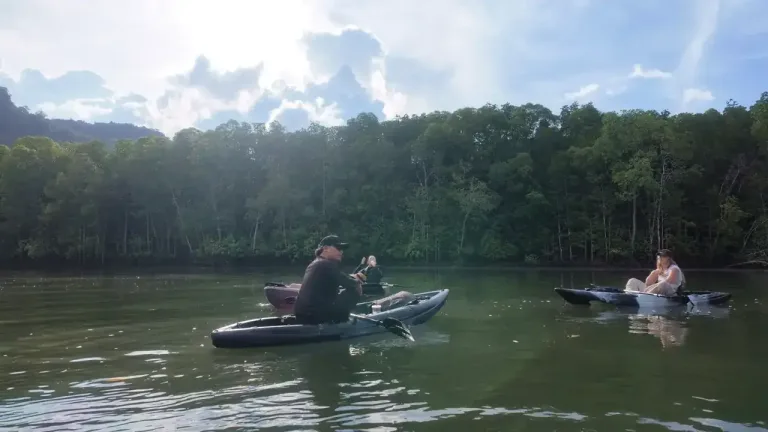
Prefer something quieter? Our mangrove kayaking tour takes you through the narrow channels by paddle, where you can also spot eagles overhead.
Common questions
Is Kilim eagle feeding included in the mangrove tour?
Yes. All our mangrove boat packages stop at the eagle area, including the 2-hour sharing boat.
Is eagle feeding bad for the eagles?
Only a small number of boats feed them, and only a little. The eagles still hunt on their own. Guests are not allowed to feed them, which keeps human food out of their diet.
How many eagles will I see?
Anywhere from about 10 on a quiet day to hundreds on a busy day. They are always in the area, but fewer come down when they have already eaten.